From Four Leaves to Good Fortune
Four-leaf clover luck is a folklore tradition, not a promise. Learn how to share its meaning as a personal keepsake, gift or family story.
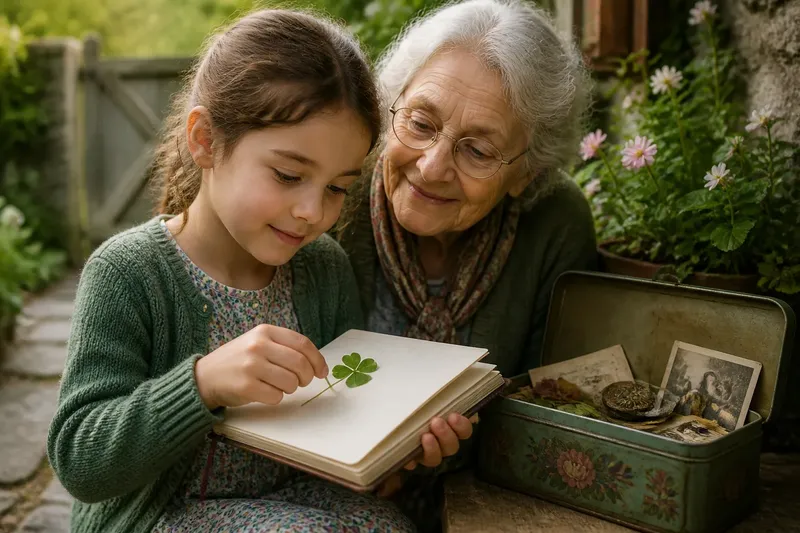
At the garden gate, a child spots a four-leaf clover and calls her grandmother over to look. The grandmother smiles: in their family, finding one is lucky. Four-leaf clover luck is a familiar piece of folklore, but its meaning comes from people’s stories and customs, not a promise about what will happen next.
A family find
Imagine Mara, an invented child visiting her grandmother Elsie, who keeps small mementoes in a tin on a shelf. Mara finds a four-leaf clover beside the path and asks if it really brings luck. Elsie says people treat it as a hopeful sign, then asks whether Mara would like to keep it or leave it growing.
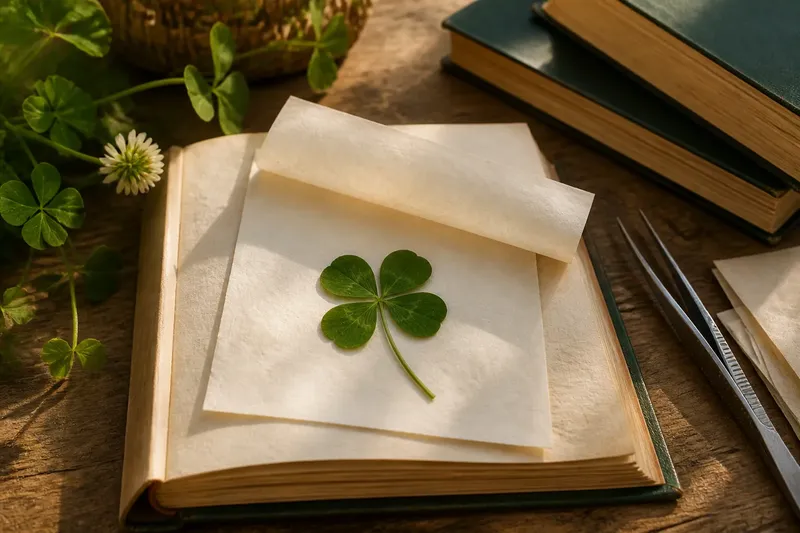
Mara chooses to press it between the pages of her notebook. The observable result is a keepsake linked to their afternoon and a story they can share. Nothing in the scene shows that the leaf changes future events. A symbol can matter to a family without serving as evidence or a supernatural promise.
Rarity and folklore
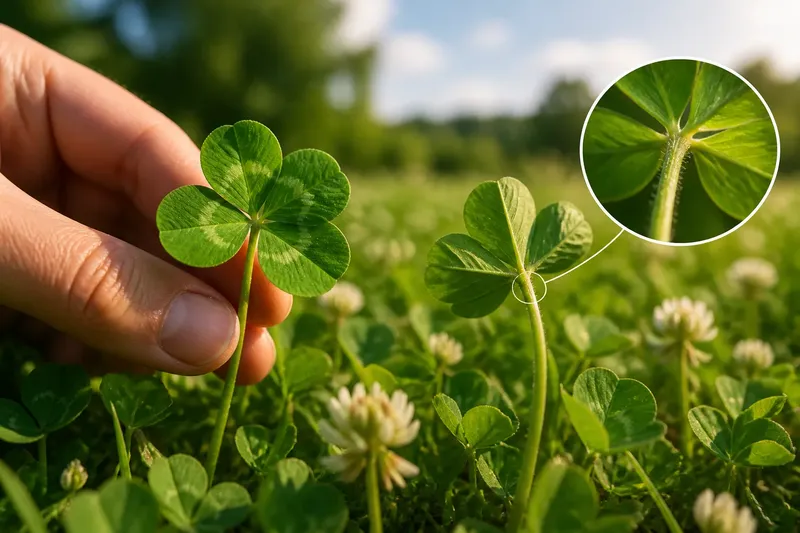
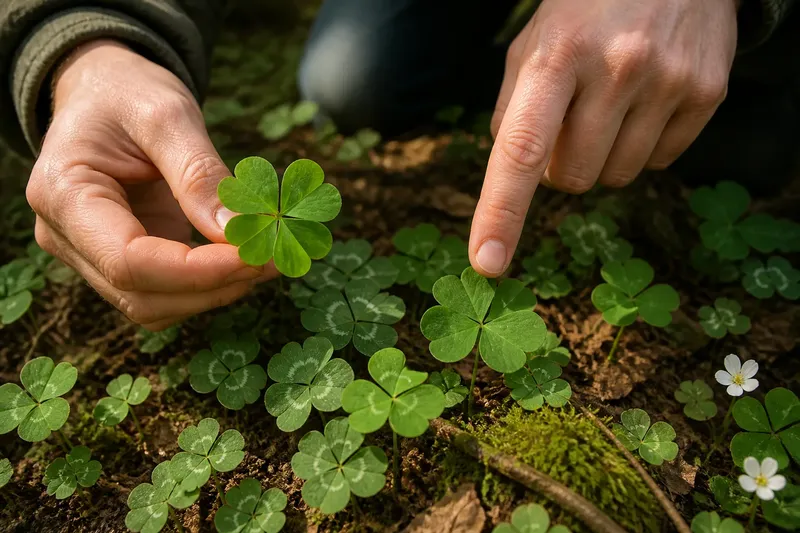
A four-leaf clover stands out from the familiar three-leaf form. Searching for one turns an ordinary patch of grass into a small exercise in attention: someone scans, notices a variation and feels pleased by the find. That pleasure can make the moment memorable, and memorable moments often become stories.
As a story passes between people, the leaf may gather a shared meaning. In Mara’s family it represents a welcome visit and the pleasure of looking closely together. Elsie does not claim it brings money, success or protection. Their version of luck is personal, not a rule that must fit every family or tradition.
Stories and settings
Four-leaf clovers appear in accounts of lucky plants, charms and hopeful signs. The details differ: one person may carry a found leaf, while another simply enjoys the association. It is more accurate to describe these as customs and stories than to present a single settled origin for the belief.
Context also changes how a clover image reads. A leaf on a greeting card may express a wish for good fortune; on a badge or shop display, it may be a local emblem or a recognisable design. The three-leaf and four-leaf forms can carry different associations, so consider who made the image and where it appears rather than assuming every use has the same meaning.
Small rituals
Mara’s family does not need a formal ceremony. Mara shows the leaf to Elsie, they talk about finding it, and the notebook keeps the memory. The object prompts a story; its value lies in the attention and connection attached to it, not in a prediction.
A clover-themed card or gift can work in much the same way. The giver may mean, “I hope things go well for you.” That gesture communicates care without claiming to settle the recipient’s future. Some people keep a leaf as a personal charm; others enjoy the custom as play. Neither response has to become a rule for everyone.
Sharing clover folklore
When Mara shows the notebook to her cousin, she can tell the exact family story: where she was, who was there and what Elsie said. That preserves the memory without presenting one grandmother’s words as the only accepted meaning of the plant.
To record a family custom, note who told the story, what the clover meant to them and whether they spoke seriously, playfully or both. If Mara gives the pressed leaf to her cousin, she can add that note. The context travels with the keepsake, so the recipient need not guess what it represents.
Say Mara’s cousin is anxious about a school performance and asks whether the leaf will make it go well. Mara explains that it is their family’s symbol of hope, not a promise, then offers to sit with her while she practises. The cousin receives company and encouragement; the clover does not predict the result. This keeps the tradition kind without asking a keepsake to do more than it can.
What does clover luck mean?
Does a four-leaf clover bring luck?
That depends on personal belief; finding a leaf does not establish what will happen next. Some people treat it as a charm or hopeful sign, while others enjoy the tradition without taking it literally.
Why is a four-leaf clover called lucky?
Its unusual appearance can make a find feel special, and people attach hopeful meanings to memorable discoveries. Explanations vary among families and traditions, so avoid presenting one account as a universal origin.
What does a four-leaf clover gift mean?
It can express a wish for good fortune or a personal connection to the custom. Add a note with your intended meaning if you are unsure whether the recipient shares the association.
Is luck part of the clover’s biology?
Leaf form belongs to botany; luck is a cultural interpretation. A person may connect the two in the experience of finding a clover, but the leaf does not demonstrate a prediction.
Keeping the story
Mara can write down where she found the clover, who was with her and what Elsie said. If she would rather not keep the plant, she can draw it or describe the moment instead. The memory does not depend on owning the object.
Four-leaf clover luck works best as a way to share a story, offer encouragement or mark an unusual find. Mara’s family can call the leaf lucky in the affectionate language of their tradition while explaining what they mean. When someone finds one, asking what they would like it to remind them of can keep the custom personal, generous and honest.