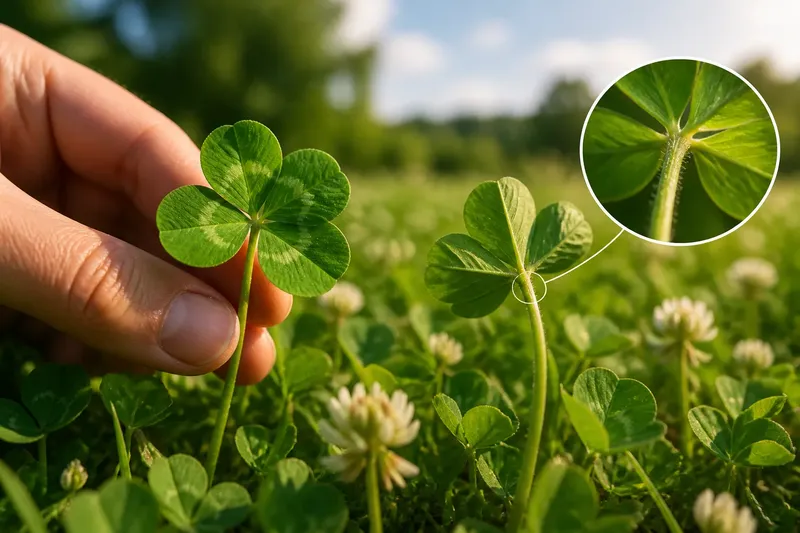
How to Press a Four-Leaf Clover Without Losing Its Shape
Learn how to press a four-leaf clover with its leaflets open and dry, so the finished keepsake preserves the shape you chose to collect.
You find a four-leaf clover beside a path, slip it between the pages of a book, and remember it days later as a flattened green smudge. Pressing a four-leaf clover well starts before the book closes: the leaflets need to be open, dry and arranged deliberately.
The familiar advice to press a lucky find straight away leaves out the part that matters most. A clover can be flattened while folded, curled or wet, but pressure preserves that arrangement rather than correcting it. The aim is to prepare the small plant carefully, then press it between absorbent sheets without shifting it.
How to press a four-leaf clover
Choose a flat, undamaged specimen and handle it by the stem rather than pinching its leaflets. Lay it on a clean, dry surface, such as a sheet of plain paper or a piece of baking parchment. A pair of tweezers can help separate overlapping leaflets, though fingers are often gentler if the plant is delicate.
Look at the leaf from above and decide how you want its outline to appear. Ease each leaflet outwards so its edges are visible and the four parts sit in a natural fan, not a tight stack. Arrange the stem to lie flat without pulling it taut. If a leaflet resists, leave it where it rests; forcing a crease can tear the surface or make the finished specimen look strained.
Let surface moisture evaporate before enclosing the clover. If it has just been picked from damp grass, place it on dry paper in a sheltered spot and wait until it no longer looks glossy or feels wet. Avoid leaving it in direct sun or on a warm radiator, where it may curl or become brittle before you can arrange it.
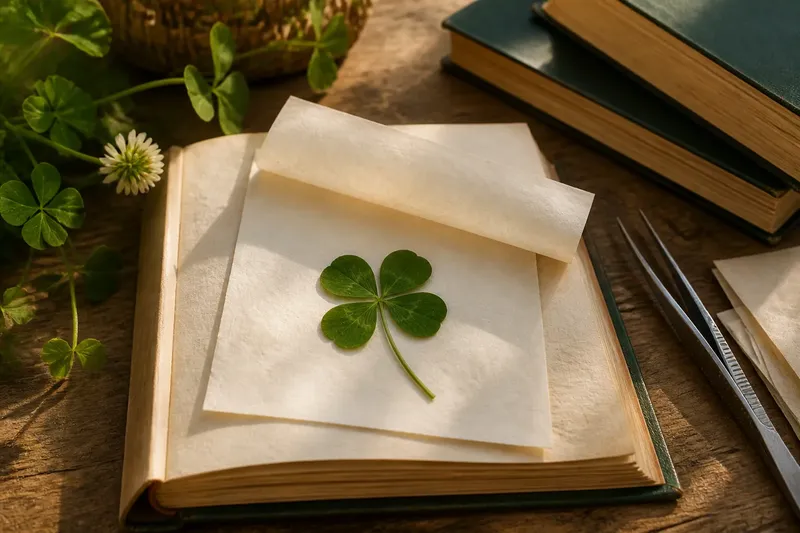
When the leaf is ready, place it between two pieces of plain absorbent paper. Smooth paper is useful because it is less likely to imprint a strong texture. Put the packet inside a heavy book or a flower press, keeping it flat and away from the book’s binding. Add light, even pressure; excessive weight is not a substitute for a careful arrangement.
Why folded leaves stay folded
Pressure does not make a specimen choose a better shape. It holds the plant against the surface beneath it while moisture leaves the tissue. If two leaflets overlap, they may dry together in that position; if the central cluster is folded under, it can remain hidden in the finished keepsake.
That is why putting a find directly into a book can disappoint. A book is a press, not an arranger. Its pages can flatten what you place between them, but they cannot spread leaflets that were tucked together or straighten a stem that has twisted around them.
Dampness creates a different problem. Wet plant tissue is more pliable and prone to sticking to neighbouring surfaces. If it is enclosed while still wet, it may darken unevenly, cling to the paper or lose a clean outline. Drying the surface first gives you a better chance to arrange the leaf and makes the pressing layers easier to replace if they become damp.
Use a dry sheet on each side of the clover, and replace either sheet if it feels moist or shows a damp patch. Keep the specimen in the same position when changing paper: lift the sheet rather than dragging it across the leaf. The purpose is not to rush drying, but to keep the plant flat while moisture moves into the paper.
What can go wrong?
Should I press a clover while it is damp?
No; wait until visible surface moisture has evaporated before arranging it between paper. A clover that is damp from rain or dew is easier to crease and may stick to the pressing sheet.
Can a folded leaflet open after pressing?
It may loosen when the paper is removed, but pressing should not be relied on to unfold it. Arrange the leaflets before applying pressure, and avoid prising apart tissue that has already dried into a crease.
Is a heavy book enough?
A heavy book can provide flat, even pressure if the clover is already arranged between absorbent sheets. A flower press offers the same basic purpose, while a loose packet in a book can shift if its papers are not kept together.
Can I use sticky tape to hold the leaflets open?
Do not place tape on the clover itself; it can tear or stain the delicate surface. If the specimen keeps moving, adjust it with tweezers and close the paper packet gently before placing it under pressure.
Protect the arrangement
Small movements can undo careful positioning. Once the leaf is set between the sheets, slide the packet into the book rather than carrying the clover uncovered. If you use a flower press, tighten it gradually and evenly so the layers do not shift as pressure builds.
Say you have found a clover whose four leaflets are partly stacked and slightly damp after a shower. You place it on plain paper indoors until the surface is dry, then use tweezers to fan the leaflets apart and lay the stem flat. You sandwich it between fresh paper and press the packet in a book; the expected result is a flatter specimen with its outline visible, rather than a dark, folded cluster.
For a specimen you particularly want to keep, prepare a second dry paper packet before starting. It gives you a clean surface if the first sheet picks up moisture, without requiring you to improvise while holding the leaf in place. Label the outer packet with the collection date or location if those details matter to your record, but keep ink away from the plant.
Store the finished clover
Do not peel the clover away as soon as it looks flat. Let it dry fully in the press; a specimen that still feels cool or flexible may be retaining moisture. When removing it, lift the surrounding paper slowly and support the leaf with a thin card if its stem or leaflet tips catch.
Once dry, store the specimen in a paper folder, archival sleeve or between clean sheets in a dry place. Keep it out of direct sunlight and away from damp rooms, which can fade or damage pressed plant material. If you plan to display it, mount it only after it is dry, using a method that does not cover the visible leaflets.
The practical rule for pressing a four-leaf clover is simple: choose the shape before you apply pressure. Dry the surface, open the leaflets gently, and keep the paper layers flat and absorbent. A few moments spent arranging the find do more for its final outline than adding weight to a clover that went into the book folded.